Sea Caving
in Mallorca
Wild. Elemental. Unforgettable.
An independent guide to the wild sea caves along Mallorca's east coast. Discover where they are, what to expect inside, and the most comfortable way to visit them from Porto Cristo.
What is sea caving?
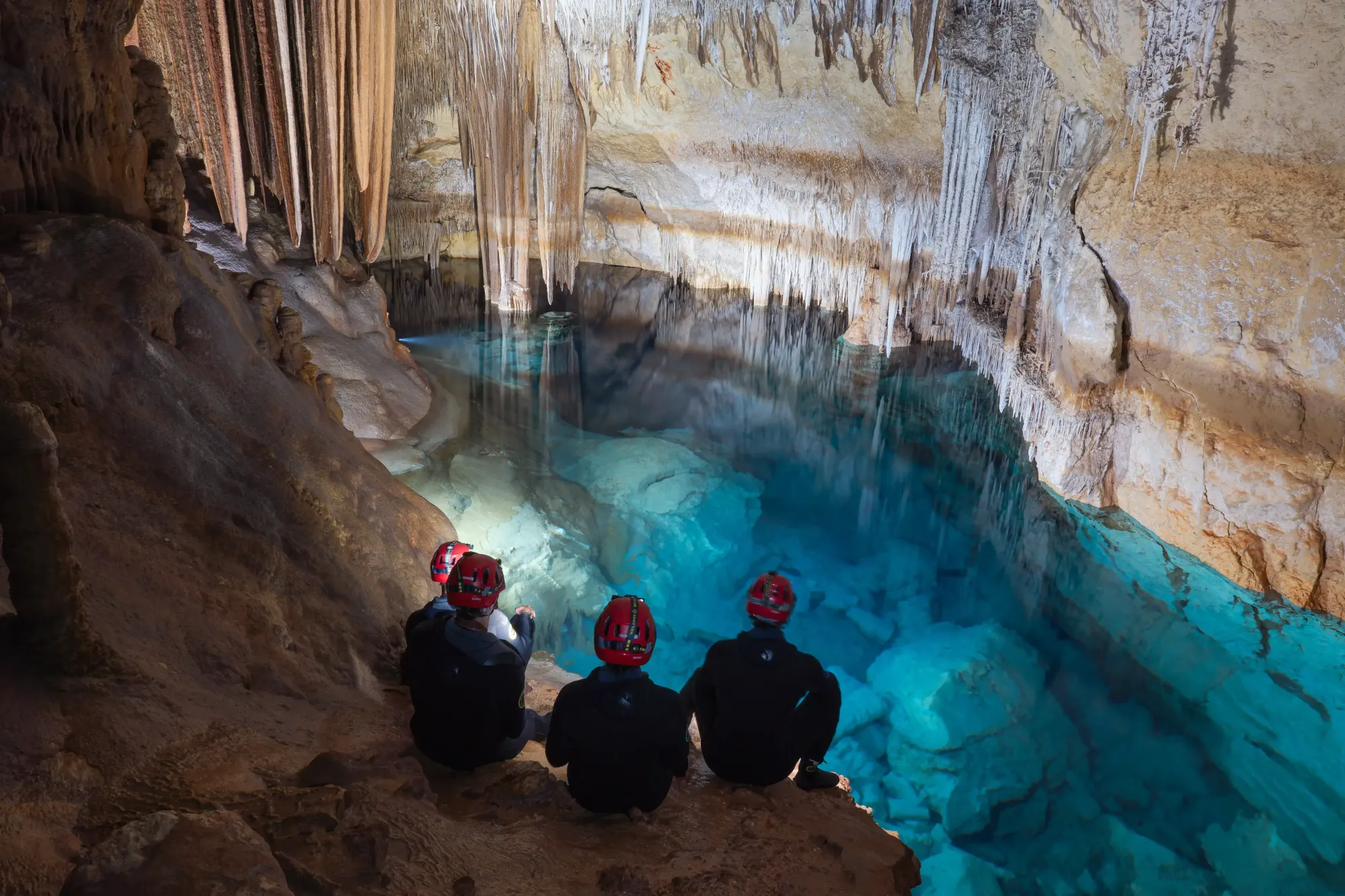
Sea caving means entering Mallorca's coastal caves from the water. You wear a wetsuit, carry a waterproof headlamp, and move through chambers by swimming and floating — part snorkel, part hike, part exploration. Every cave feels different.
On the Llevant coast east of Porto Cristo, several caves are accessible to visitors with a guide. Some require only a short swim from a cove. Others, like Cova des Coloms, contain their own hidden underground pools.
There are no paved paths or electric lights. You navigate by daylight shafts and your own beam, over rock and through clear water.
Why this coastline is full of sea caves
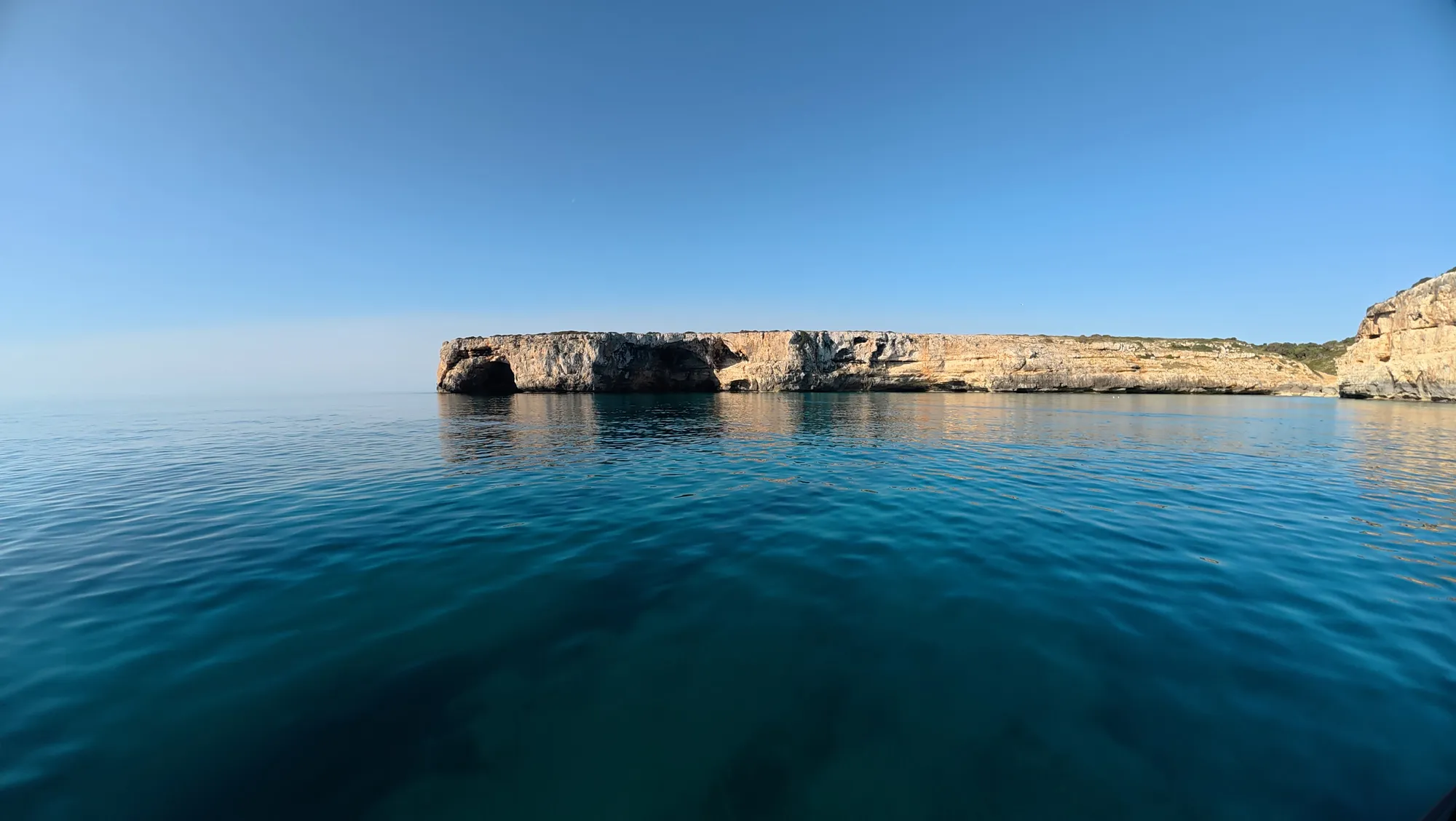
Eastern Mallorca rests on young, porous Miocene limestone — eogenetic karst that is still being carved by water. Rain and sea have dissolved tunnels and chambers through the rock for millions of years.
Where chambers meet the sea you get sea caves. Where they also meet fresh groundwater you get anchialine systems: layered salt and fresh water in the same pool, often with a visible halocline and ancient mineral formations.
The Llevant coast sits within sensitive Natura 2000 areas. Treat every cave and cove with care — leave no trace.
Three caves worth knowing
Hundreds of caves exist on the island. Only a few are suitable — and safe — for visitors. These are the ones you'll hear about.
Cova des Coloms
The signature cave for most guided trips from Porto Cristo. A large, partly-roofless chamber with a clear brackish pool near Cala Varques.
Full guidePirate Cave, Cala Varques
A compact sea cave a short swim from the popular cove. Ideal for independent snorkellers exploring the Llevant coastline.
See more cavesTechnical systems
Advanced caves like Cova des Pas de Vallgornera require specialist cave diving qualifications and permissions. Not for casual visitors.
Why some are restrictedCova des Coloms
The vast sunlit chamber with the turquoise pool. A partial roof collapse lets daylight pour in and reflect across the water. Stalactites, a visible halocline, and absolute quiet.
Note: there is a completely different dry cave of the same name in Menorca. This is the Mallorcan sea cave near Cala Varques.
Reach it by a long coastal hike and swim, or — the far more comfortable option — a small-group boat from Porto Cristo.
Sea caving vs a classic show cave
The Cuevas del Drach and a real sea cave are completely different experiences. Many people do both for that reason.
| Show cave (Drach) | Sea caving (Cova des Coloms) | |
|---|---|---|
| Setting | Paved galleries, installed lighting | Natural rock & water, daylight + headlamps |
| Group size | Often 100+ | Small groups, ~8–10 |
| Activity | Walking marked paths | Swimming, floating, wading |
| What you wear | Regular clothes | Wetsuit, helmet, headlamp |
| Atmosphere | Theatrical, polished | Raw, quiet, elemental |
| Best for | Easy cultural visit | Active adventure |
The best way to experience it
Independent access means a 30–40 minute hike across sharp limestone and a 300 m swim with all your gear. Most visitors prefer the far more comfortable option.
A small-group boat from Porto Cristo marina takes you along the coast, drops you at the cave with an experienced guide, wetsuit and light included. No hike. No logistics.
- 30 years on the water
- A long-established operator working from the Porto Cristo marina.
- PADI 5-Star Centre
- Recognised training and safety standards for guided water activities.
- Small group sizes
- Guided sea cave trips are kept deliberately small.
- Direct boat access
- No coastal hike — depart and return by boat from the marina.
Safety & suitability
It looks adventurous — and it is — but it is accessible to most fit adults and capable teens when guided.
Wetsuits do most of the work
5 mm of neoprene gives powerful buoyancy and warmth. Strong swimming is not required.
Guides make the call
Operators monitor wind, swell and visibility. Trips are rescheduled when conditions aren't right.
Frequently asked questions
Sea caving is the activity of exploring coastal and partly submerged caves along Mallorca's limestone shoreline, usually wearing a wetsuit and a waterproof headlamp. Unlike a show cave, you move through the cave yourself — wading, swimming, and sometimes floating through chambers lit only by your own light. Most visitors experience it as part of a small guided trip rather than on their own.
No. The sea caves covered on this site, including Cova des Coloms, are accessed at sea level rather than through technical vertical caving routes. If you can swim a short distance and feel comfortable wearing a wetsuit, you can take part in a guided sea cave trip. Guides brief every group beforehand and adjust the pace to the slowest swimmer.
No, and the difference is the whole point. The Drach Caves (Cuevas del Drach) are a developed show cave with paved walkways, artificial lighting and large groups. Sea caving is an outdoor, active experience in a natural, unlit cave reached from the water. Many visitors enjoy both on the same trip — see our comparison of sea caving vs the Drach Caves.
The most straightforward option for visitors without their own boat or technical gear is a guided sea cave trip by boat from Porto Cristo marina. This avoids the long coastal approach on foot and includes wetsuits, helmets and lights. See our guide to sea cave tours in Mallorca for details.
Ready to step inside a sea cave?
The most comfortable, safe and scenic way is a small-group guided boat trip from Porto Cristo.