Cova des Coloms, Mallorca: The Complete Sea Cave Guide
A full guide to Mallorca's Cova des Coloms: what's inside, how it formed, how to get there by land or by sea, and why it isn't the cave of the same name in Menorca.
Important: Two Caves Share This Name
Before anything else, it's worth clearing up a genuinely common point of confusion. Search for "Cova des Coloms" and you'll find results for two unrelated caves on two different islands.
The Menorcan Cova des Coloms is a large, dry cave in the Binigaus ravine near Es Migjorn Gran, historically used as a Talayotic burial site. It has no water inside, and it's on a different island entirely.
This guide is about the Mallorcan Cova des Coloms — a partly flooded sea cave on the Llevant coast, near Cala Varques, not far from Porto Cristo. If you're planning a trip from Porto Cristo, Manacor, or anywhere on Mallorca's east coast, this is the cave you're looking for.
Inside the Cave: What to Expect
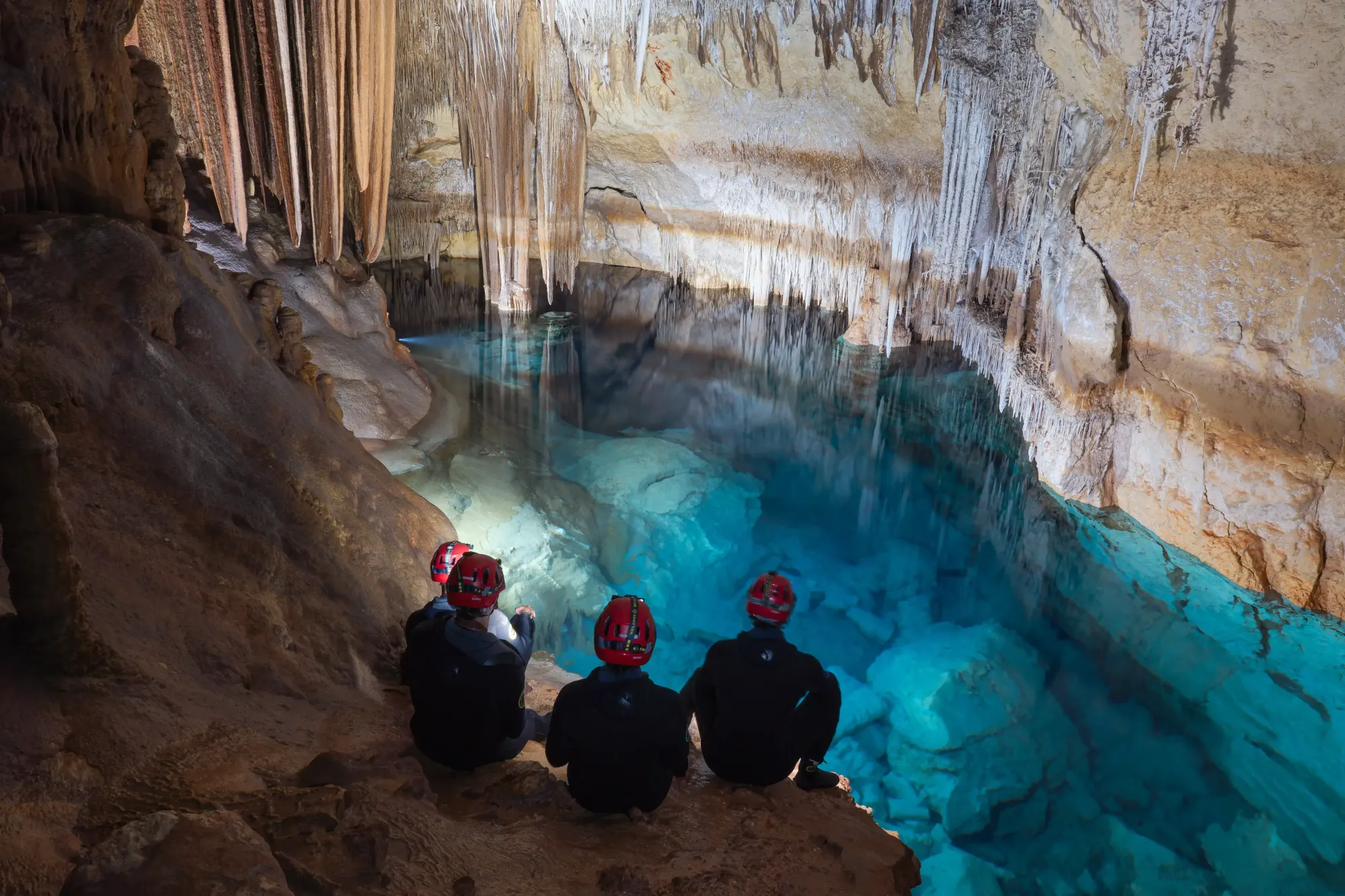
Cova des Coloms opens into a large chamber, part of which is open to the sky through a natural collapse in the cave roof. This is one of the things that sets it apart from many other sea caves: rather than total darkness, daylight pours in and reflects off the water below, lighting up the chamber in a way that changes through the day.
The floor of the chamber is a pool of brackish water — a mix of seawater and fresh groundwater seeping in from the island's limestone aquifer. In places, you can see a halocline: a faint, shimmering boundary layer where the two types of water meet but haven't fully mixed. It's a strange, slightly disorienting effect, and one of the most-photographed details of the cave.
Around the edges and upper walls, you'll see stalactites and other mineral formations, some with a reddish tint from iron-rich deposits. These formations, technically known as phreatic overgrowths on speleothems, mark old water levels from thousands of years ago — a slow-motion record of the Mediterranean rising and falling around this stretch of coast.
Want to know more about what it's actually like to swim in water like this? See our guide to swimming inside a cave in Mallorca.
How to Get to Cova des Coloms: By Land vs By Sea
By Land
The land route starts with parking near Cala Varques — itself a popular cove with limited, informal parking. From there, it's a walk of roughly 30-40 minutes across uneven, exposed limestone terrain, with no shade and no marked path in the conventional sense. Once you reach the right point on the coastline, you then need to swim around 300 metres in open water to reach the cave entrance, carrying a mask, fins and a waterproof light.
It's a route that experienced, well-prepared visitors do complete — but it's worth being honest about what it involves: a hot, exposed walk, an open-water swim with gear, and no facilities, signage, or easy way to turn back partway through.
Heat and exposure on the land route
In summer, the limestone terrain around Cala Varques offers no shade and can get very hot underfoot. Anyone attempting the land route should carry plenty of water, wear appropriate footwear, and avoid the hottest part of the day.
By Sea
The alternative is to approach by boat. A guided sea cave trip departs directly from Porto Cristo marina, follows the coastline past Cala Varques and the surrounding coves, and brings you close to the cave entrance by water — removing the hike and the open water swim with gear entirely. You arrive already wearing a wetsuit, with a helmet and light provided, guided by someone who knows the cave and the conditions.
For most visitors, particularly those without their own snorkelling gear, transport to Cala Varques, or experience with open-water swims, this is the simpler and more comfortable way to see the cave.
Essential Equipment
Whichever route you take, a few things make a real difference: a well-fitting wetsuit (for warmth and buoyancy), a secure waterproof light, and footwear that can handle wet rock. On a guided trip, all of this is provided. If you're putting together your own kit, our packing list for a sea cave trip covers exactly what to bring and what to leave at the hotel.
A Note on the Surrounding Environment
The coastline around Cala Varques and Cova des Coloms sits close to land and marine areas recognised under the Red Natura 2000 network. We don't want to overstate the formal protection status of the cave itself, but the wider area is ecologically sensitive — please avoid touching cave formations, take any litter with you, and keep noise to a minimum, especially if exploring independently.
Frequently Asked Questions
Both islands have a place called "Cova des Coloms," and this causes a lot of search confusion. The Menorcan Cova des Coloms is a large dry cave in the Binigaus ravine near Es Migjorn Gran, historically used as a Talayotic burial site. The Mallorcan Cova des Coloms — the subject of this guide — is a partly flooded sea cave near Cala Varques, on the Llevant coast close to Porto Cristo. The two are unrelated beyond sharing a name.
Depth varies across the cave, from shallow shelves near the edges to deeper sections in the central pool, which can be over a person's head in places. A wetsuit provides buoyancy, so swimming ability matters less than confidence in open water. Guided trips brief visitors on where it's shallow enough to stand.
The cave sits within the wider Llevant coastal area, close to land and marine zones recognised under the Red Natura 2000 network, including the Cales de Manacor Site of Community Importance. We avoid overstating the formal protection status of the cave itself, but the surrounding coastline is ecologically sensitive, and visitors are asked to treat it accordingly: no touching formations, no litter, and no disturbing wildlife.
Yes, but it involves parking near Cala Varques, then a roughly 30-40 minute walk across uneven, exposed limestone terrain, followed by an open-water swim of around 300 metres to reach the cave entrance — all while carrying a mask, fins and light. It's a serious undertaking in summer heat. Our guide to access by land vs by sea explains both routes in detail.
Continue exploring
What to Bring on a Sea Cave Trip in Mallorca
What operators provide, what to pack from your hotel, and advice on cameras and valuables.
Read moreCan You Swim Inside a Cave in Mallorca?
What it's actually like to swim inside an anchialine cave, including the halocline effect and water temperature.
Read moreSea Cave Tours in Mallorca: How to Choose
Hiking tours vs boat tours, what premium operators include, and our recommended guided option.
Read more